Showing posts with label Floral Dresses. Show all posts

Tuesday, 6 June 2017

Wisteria


In the language of flowers, wisteria means obsessive passion.  Once you've discovered their beauty, you too, may be obsessively passionate about wisterias!

Wisteria is a climbing tree, native to China, and Japan.  Wisterias grow tall, and wide. Many will grow to 10 metres (30 feet) high, and 20 metres (60 feet) wide.  The world's largest wisteria is an acre in size!  You'll find wisterias growing along the walls of houses, reaching over arched doorways. They're often found on trellises, or pergolas, sturdy enough to support their weight.

For all their strength and grandeur, wisterias appear softly feminine, ethereal and cloud-like.        


Although wisteria trees provide welcome shade, they love full sunlight.  They grow beautifully in a South facing garden, or in an open park, away from shade trees.  

Wisteria intertwines as it grows, forming braided wood tree trunks and branches.  Chinese wisteria grows counter clockwise, while Japanese wisteria grows clockwise.  
    

Another way to tell the difference between Chinese and Japanese wisteria, is to study the timing of the blooms and leaves. Japanese wisteria leaves appear on the tree before the blossoms.  With Chinese wisteria, the blossoms appear, then the leaves begin to grow later.


Cultivating wisteria takes patience...years of patience!  It can take twenty years to grow a wisteria tree from seed, and wait for it to bloom.  Or, you can take a cutting, and wait about four years before it blooms.  Most people buy a mature wisteria tree from a nursery, take it home, and plant it in a sunny spot.  Once wisteria takes hold, stand back, and watch it grow, and grow and grow!


In celebration of the awesome strength and ethereal beauty of wisteria, and women, I've created a line of dresses and draped kimonos, that will move gently with the Summer breeze. Lovely for a bridal kimono party, or a cruise.


All dresses and draped kimonos are available online in my Art of Where shop.


Photographs Copyright of:   Ruth Adams, Widow's Endorphins Photographic Images Incorporated.

Monday, 13 March 2017

Holi, India's Festival of Colour


Toronto is bracing for a severe late Winter storm, with up to 20cm of white powder (that's nearly 8 inches)!  Meanwhile, on the other side of the planet, the people of India are celebrating Holi, the Hindu Festival of Colour, with a rainbow blizzard of coloured powders and street dancing.

You've probably seen it depicted in wildly choreographed Bollywood movies, and not known exactly what it's all about. Starting with bonfires during last night's full moon, the two day festival is a celebration of the end of Winter and beginning of Spring;  of the triumph of good over evil.  It is a time to forgive, and let go.  Really let go!  Dance in the streets!  Throw coloured powder in the air, covering friends and strangers in bright yellow, pink, red, green, blue and purple;  and then, toss water balloons!      


The creative wild child in me loves the idea of running through "snowflakes" of pink, purple and yellow.  The neat freak and hypochondriac are hyper-ventilating.  What happens if you breathe in all that powder? Does it harm the skin?  Does it wash off?  Is your hair going to stay green?  What's the street cleanup like the next day?

Even non-toxic powder made from cornstarch and/or rice flour will still cause eye, ear, nose, throat and lung irritation if you run through a thick cloud of it.  What's worse, some powders have been found to have finely ground glass and mica in them.  People have reported stinging red eyes, and a sensation of having sunburned nostrils for days afterwards.  Some have developed asthma.

The recipe for non-toxic, homemade Holi powder is simple:

1 Cup cornstarch (or rice flour)
1/2 Cup water
Few drops of food colouring

Mix the cornstarch and water to form a paste.  Add the food colouring, and blend thoroughly.  Roll into a ball, then, using a rolling pin, flatten into a disc shape.  Leave to dry overnight.  When it is dry, and cracked, put the disc into a coffee grinder, and pulverize it into a fine powder.  Or, put the disc between layers of wax paper, and crumble it, using the rolling pin. 


Once upon a time, colours were derived from plants.  Industrial age dyes, are very bright.  While dyes sold in North America are non-toxic, that is not the case in India.  Many chemical dyes, now illegal in other parts of the world, are sold in shops all over India.  The toxic dyes are made of such things as lead oxide (for black), which causes disorientation and kidney damage;  Mercury Sulphite (for red), which causes disorientation, skin and eye irritation;  and highly corrosive Aluminum Bromide (for silver), which causes skin, eye and lung irritation.

The solution is to Go Green!  Non-toxic, organic alternatives are now being promoted in India. Historically, beet juice was used to produce a deep magenta colour.  Sandalwood creates a red colour, and pink is created by adding wheat flour. Green leafy vegetables create - you guessed it - green. Henna will give a deep orange colour, and Turmeric is used to create a deep yellow.  None of these natural dyes will harm soil or water as they drain off during cleanup, and on a dry day, the wind just blows the powder away.

Once the party is over, it seems the entire country is showering and moisturizing.  Some stains take longer to remove.  To avoid this, there are things which Holi festival goers are advised to do before heading out into the streets.  In addition to sunscreen, celebrants are advised to apply coconut oil, olive oil, or Vitamin E all over their face, and any exposed skin. They're told to make sure the oil covers the earlobes, and the area behind the ears, as well as nails.  Hair is protected with coconut oil, or mustard oil.  Goggles are also advised.  I would go a step further, and add an N95 mask to prevent breathing in contaminants!

One blogger warned photographers to cover their cameras with a plastic bag, or a raincover.  Another photographer said that he removed all of the powder from his camera, by using the air hose at a local garage.     
     

One way to add colour to your life all year long, is with these "breathtaking" flare dresses and draped kimonos!


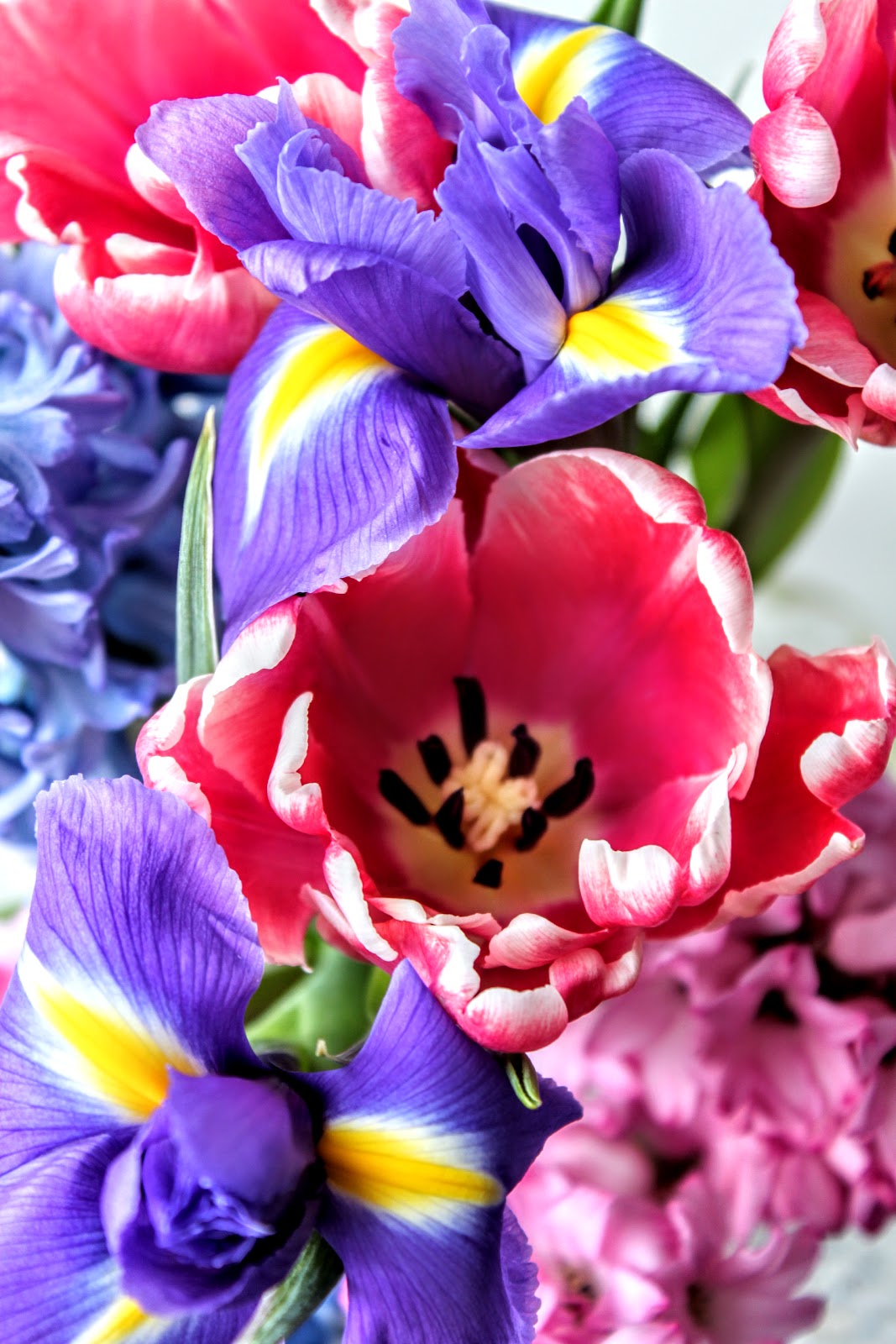
The vibrant colours of the purple Iris and deep pink Parrot Tulips now in wearable art:
http://bit.do/flare-dresses

Photographs Copyright of:  Ruth Adams, Widow's Endorphins Photographic Images Incorporated.

Thursday, 15 September 2016

Monarch Butterflies


For some, the sight of a butterfly is a loving sign from a deceased loved one, that they are ever near. Cultures around the world, from the Japanese, Chinese, and Russians, to North America's Indigenous peoples, see butterflies as symbols of souls, transformation or rebirth.  The ancient Greek word for butterfly - psyche - means soul.  In Mexico, where millions of Monarch butterflies arrive in late Fall, around All Souls Day and the Day of the Dead, the butterflies are thought to be returning souls.

Ironically, Monarch butterflies are threatened with extinction.  The US Center for Biological Diversity says the Monarch butterfly population has declined 80% over the past decades.  In July, their Senior Scientist, Tierra Curry wrote, "On top of the loss of milkweed in its Summer grounds, logging in its Winter home in Mexico has increased, a severe storm this Spring killed millions of Monarchs, and a mine now threatens the Monarch Biosphere Reserve."  Curry says the "catastrophic decline" in the Monarch population is in part due to the use of Monsanto's Roundup herbicide on genetically engineered Roundup resistant crops.  Milkweed is killed.  Milkweed is the only source of food for Monarch larvae.


Monarchs are a symbol of transformation, and of rebirth.  They metamorphosize from larvae, to caterpillar, to butterfly.  I have a coffee mug with the inspirational words, Just when the caterpillar thought its life was over, it became a butterfly.  It took on a whole new meaning, when my husband was finally listed for a liver transplant.  It takes on yet another meaning, now that I am in the "pupa stage", recreating my life as a widow. 


Schoolchildren learn about the life cycle of the Monarch butterfly.  For those of us who've forgotten: the butterfly eggs are laid on the Milkweed plant, and the larvae hatch, and feed on it exclusively, growing into fat caterpillars.  The caterpillars then encase themselves in a hard, protective shell, and transform from this pupa stage, to emerge from the cocoon as butterflies.

As the days grow shorter, and the light changes, Monarch butterflies begin their migration from Canada and the US, into Mexico.  It's an arduous journey of 5-thousand kilometres, or 3-thousand miles to the warmth of their Mexican Winter home.

A 56-thousand hectare, or 140-thousand acre Monarch butterfly reserve in Mexico, is now a Unesco World Heritage Site. The government funds indigenous farmers in the mountain region to preserve the Monarchs.  There, the butterflies hibernate, until the siren call of Canada's northern climes stirs them.


I'll bet you didn't know that two dots distinguish the male Monarch from the female.  If you look closely at the photo above, you'll see two black oval shaped dots on a straight black vein, on either side of the tail of the Monarch.  It's a boy butterfly!

Did you know that the Monarch was the first butterfly to have its genome sequenced?  They were also transported to the International Space Station for breeding.  They truly are regarded as the monarchs of the butterfly world!

Science loves the Monarch, and so do The Arts.  I've added new designs to my Art of Where clothing line, based on the photo of the Monarch butterfly taken in Toronto's High Park last week. Great for those of you heading to Mexico for the Winter!


Photographs and Designs Copyright of:  Ruth Adams, Widow's Endorphins Photographic Images Inc.

Tuesday, 12 April 2016

Wearable Art


I can't sew a straight line.  So, no one is more surprised than me, to have my own line of clothing! Designed using my fine art photographs, the clothing line includes breezy flare dresses for Spring and Summer, as well as lightweight kimonos, which are great for the beach, or curling up at home.


There are two versions of the Peacock Feathers flare dress - each with a mirror image of the front, on the back.  The dresses and kimonos are easy care, and quick drying.  Machine wash in cold water, and tumble dry on regular cycle - or, let drip dry.

 
The Peacock Feathers kimono is one of the designs which works for both men and women.  These are afterall, male peacock feathers!

The peacock feathers are part of a feather bouquet which I bought a few years ago, in Toronto's "Little India" district.  It is a six block area, which Tourism Toronto bills as the biggest South Asian market in North America.  They were part of the decoration for a Moroccan themed birthday dinner party for my husband.  Yes, I know Morocco is no where near India - we Canadians are masters of "fusion confusion".  


Bridal party season is almost here!  It is the trend for brides to give each bridesmaid her own kimono to wear while getting her hair and makeup done before the wedding.  Bridal photographs now include pictures of the bridal entourage all wearing their matching, or complimentary kimonos!  These vivid prints won't fade, and will be a lovely reminder of a happy day.

The kimonos would also be a lovely Mothers' Day gift!  Doesn't this say, "relax, rejuvenate"?!  It's great for a spa weekend away, or at home.


Ordering a kimono, or flare dress is just a click or two away.  On the right side of the blog, near the top, where it says, "Let's Go Shopping", you'll see a listing for my Art of Where shop.  If you click that, you'll see all of the kimono and dress designs, along with pricing and order information.  But wait, there's more...   

There are two versions of this kimono - great for best friends, sisters, or Mother-Daughter gifts.


Unlike the flare dresses, with a back and front that is a mirror image of the other, the front of each kimono design, is completely different from the back.


There are also two versions of the Birthday Bouquet flare dress.  One, showing the bouquet as it appears in the original photograph, the other is an inverted view, with the crystal vase forming the bodice of the dress.


This is the fine art floral photograph used in the kimono and flare dress design.  I called it, Birthday Bouquet, because it was made up of flowers in two different floral bouquets given to me on my birthday.  The crystal vase and flowers are reflected in a mirror.  


With the enviable exception of those in Vancouver and Victoria, Canadians live with snowflakes for many months of the year.  Yet, the snowy white blossoms of the Cherry tree enthrall us.  The photograph was taken last year, in Toronto's High Park, where thousands make an annual pilgrimage to celebrate the arrival of the blossoms, and Spring.  


The freshness of this flare dress captures the joy and optimism of the arrival of Spring.  


This is the front and back of one of the two versions of Cherry Blossoms Blue Sky. Since blossoms represent a new beginning, this kimono would make a lovely gift for a young graduate, bride, or a young mother.  


This is the other version of the Cherry Blossoms Blue Sky design.  


Stargazer Lily on Japanese Paper is the photograph which inspired this flare dress!


These Stargazer and white Oriental Lilies against the blue wall, inspired this flare dress design. There's a retro feel to this dress.  It reminds me of the Hawaiian prints from the 1940's and '50's.


As the sun slowly sinks in the West...the campfires begin to burn.  The Awesome October Rose image is of one of the Campfire Roses which bloomed on my balcony last Summer and Fall.


The flare dresses are perfect for a hot Summer day, or a hot Summer night on the dance floor.  The fabric is made in Canada, of 72% Ecopoly and 28% Spandex, and wicks away moisture. 


There are two versions of the Campfire Rose flare dress.  I like the ruffles created by the petals.


There are also two versions of the Campfire Rose kimono.

All the kimonos are made of lightweight silky knit 100% Ecopoly fabric, with a knit bamboo fabric trim, and chiffon belt. They are printed and sewn in Canada, on Canadian made fabric, and priced in Canadian dollars.


There are more designs...you'll find them, along with information on how to order at:


Clothing designs and original photographs copyright of:  Ruth Adams, Widow's Endorphins Photographic Images Incorporated.