Showing posts with label Floral Photogaphy. Show all posts

Saturday, 11 April 2020

What We Gained During Lent


If you grew up Catholic, you know about the religious tradition of giving something up for Lent, the six-week period of sobre contemplation and repentance, which ends Easter Sunday. In those long weeks between Mardi Gras and Easter, people often ask each other, "what did you give up for Lent?" The answer is usually chocolate, carbs, or alcohol.

This year, the answer heard around the world, in Catholic, Protestant, Jewish, Sikh, Muslim, Buddhist, and Atheist homes, is, everything. We universally gave up everything, from our freedom to travel, to our joy in holding our loved ones. From the right to have a neighbourhood block party, to attending a rock concert. Thousands have given up their lives. The World Health Organization reports that 99,887 people are confirmed to have died from the COVID-19 virus.

Even for those who are not among the 1,614,951 confirmed cases of COVID-19, there has been heartbreak. Life's BMD milestones - births, marriages and deaths - have all been touched by the pandemic. Weddings and honeymoons have been cancelled. Funerals are being held via Zoom, or not at all. Those who have lost a loved one in these times, are grieving alone, without comforting hugs, and a hand to hold. Friends of mine just had their first baby, born prematurely in this time of crisis. While both the mother and baby were kept in hospital for weeks, the young father was not allowed to be with them. Like a soldier at war, he could only look at pictures, and long for the day when he could hold his wife and baby in his arms. Many of my friends have a parent or parents in care homes, and are unable to visit with them. A lucky few, are able to communicate with each other through a window. We have given up so much.


We have also gained. We have gained our humanity, gratitude, deep appreciation for human connection, and above all, our love for one another. The pandemic has forced the most social of creatures - human beings - to self isolate for the good of all. We are witnessing a universal act of caring humanity. 

Nightly, in my own city of Vancouver, residents step out onto balconies and porches to loudly clap, cheer, and bang on pots, to show their heartfelt, and sincere gratitude to the frontline healthcare workers for their courage and dedication. Gratitude is also expressed in simple words of thanks, to store clerks, and security guards in grocery stores and pharmacies, who put themselves on the line, so that the rest of us can eat, and take our medication. There is also a deep gratitude for our health, and - in Canada - our healthcare system. In this country, our Federal and Provincial governments have all stepped up to provide funding for those who are out of work, and struggling to pay for food or shelter. No matter what our politics, Canadians, who've had cause for cynicism in recent years, have gained an appreciation for the good which governments can do.

More than anything, there's a sense of how important connectedness is to our wellbeing - to our very souls. We are social beings, who are meant to be with one another. The experience is giving us a sense of the loneliness and isolation felt by elderly people, and marginalized people. That empathy may give way to greater caring in the future.

Unable to physically be together, people are reaching out to connect online, and by phone. It's been wonderful to speak with people I haven't spoken with in a long time. How many of us have learned to use Zoom in the past few weeks? How many are telling friends and family that they are loved? No one is taking life for granted. There's been a transformation in our lives.

Blessings this Easter, for your health and wellbeing. May your life be richer for this experience.
I love you.


Photographs Copyright of: Ruth Adams Widow's Endorphins Photographic Images Incorporated.


Thursday, 14 December 2017

Thank You 25-Thousand Times!


Another milestone in the brief history of my little blog, Widow's Endorphins:  WE has just reached 25-thousand views!  This really should read:  WE have.  This is something that we have done together, dear readers.  I am grateful.


 Photographs Copyright of:  Ruth Adams, Widow's Endorphins Photographic Images Incorporated.

Monday, 7 August 2017

Cosmos for an Eclipsed Lunar Eclipse


With so much activity in our sky this month, it's the perfect time to gaze at one of the neglected stars in our earthly gardens: Cosmos.  Sweet, simple and very independent cosmos, gets eclipsed by roses, peonies, and orchids, the stunningly beautiful, but very demanding divas of the flower world.

The word cosmos, is Greek for balanced universe.  The complete opposite of chaos and disorder. Astronomers use the word to describe the universe as a complex and orderly system.  The flower too, is balanced, with its petals arranged in opposite pairs.  When you look at a large field of cosmos, they look like stars in the Milky Way, spreading across the night sky!
  

Go ahead, ignore them!  Cosmos thrives on neglect.  These sunloving flowers are one of the easiest plants to care for, even in dry, drought conditions.  They need very little water, and don't bother fertilizing the soil.  In fact, if the soil is too rich, the leaves will take over the flowers. 

Cosmos are members of the sunflower family, however, their seeds look nothing like sunflower seeds.  They resemble tiny pine needles.  The plant self-seeds, too.  If you want to grow your own plants from seed, it's best to start later, rather than sooner.  The plant doesn't do well until after the last frost has passed, which in parts of Canada could be early June.  For once, being an early bird is not a good thing.

So, dear I-love-flowers-but-can't-be-bothered-with-all-the-work gardener, if you're beating yourself up about being a "lazy procrastinator", stop it!  Go out and buy cosmos plants (or maybe do it next year). It'll be a gardening marriage made in heaven!


I first saw cosmos while driving through the Quebec countryside.  It was blooming alongside weathered fencing, in farm fields.  The plants were higher than the wooden fences, their pink petals waving in the wind, above billowing mounds of what looked like asperagus leaves.


Quebec is a long way from the plant's origins in Mexico.  Which only proves the hardiness and adaptability of cosmos.  It grew wild in arrid regions of Mexico, accidentally making its way to the high plains of South Africa, by way of Argentinian horsefeed shipped to feed war horses during the Boer War.


Cosmos was introduced to Britain and Europe in the 1800's.  Then, it almost disappeared.  In recent years, many new varieties have been created, and last year in the UK, 2016 was named, The Year of the Cosmos.


Chocolate Cosmos is creating a sensation.  Discovered in 1860, it was last seen growing in the wild in 1878.  The deep chocolatey maroon coloured flower is gifted with a chocolate scent!  While I haven't had the pleasure of the flower's fragrance, I am told that it is, "out of this world"!


Tonight's Lunar Eclipse won't be seen in North, Central or South America.  It has nothing to do with the smoke from wildfires in British Columbia.  Not every eclipse is seen all over the world. This one will be visible in Europe, South and East Asia, Africa, Australia, and the most Easterly side of Brazil.

It's also visible from Antarctica, but only a lunatic would stand outside to watch a Lunar Eclipse from anywhere on that continent!  Tonight's Antarctic forecast is for temperatures of -55C (-67F)...with the windchill, it will feel like -74C (-101F)!

There's still plenty to see in the night sky this month:  mark your calendars for August 12th, when the Perseid Meteor Shower is at its peak, and August 21st for the Total Solar Eclipse.


Photographs Copyright of:  Ruth Adams, Widow's Endorphins Photographic Images Incorporated.

Tuesday, 25 July 2017

Foxglove


Foxglove and sunny Summer mornings - forever etched in my childhood memories.  There's something nostalgic, and comforting about tall spires of foxglove growing alongside a fence, or backyard flower garden.  They're a favourite of everyone who loves English gardens:  gardeners, photographers, painters...and hummingbirds!  


Foxglove grow in full sun, or shade.  They're not wild about heat.  So, if you live in a hot, sunny climate, plant them in a shady spot.  For those of us in Canada, full sun on the Westcoast, and sun to part shade in humid Eastern Canada.
Don't be surprised if they do not bloom the first year.  They're biennial, which means they bloom the second year.  They'll come back up for two or three years, then die.  You may not notice any difference, because the plant re-seeds itself, scattering seeds for the following year, and ensuring a wonderful two to five foot "wall" of colour in your garden year after year.  


Foxglove has a sinister side.  Even as children, we would warn each other not to eat the flowers. The plant, also known as Digitalis, is toxic.  While I have always known about the poisonous flowers, in doing research for this post, I've discovered that you need to wear garden gloves to handle any part of the plant.  Gardeners are warned not to touch their faces, or eyes with the gloves.  Even the water in a vase of foxglove. is poisonous to a child, or family pet.  Deer and rabbits stay away, which is why is makes a good border plant around a property.

I wish I'd known all of this, before happily carrying the plant home from the grocery store on Friday, and having a full house (and balcony) of guests on Sunday!  Even for the photographs, I was touching the plant with bare hands.  I'm still standing!


Foxglove is grown commercially, to provide pharmaceutical companies with enough Digitalis for life saving medications. Digitalis has been used for decades to regulate and strengthen the heart.

Even when used medicinally, Digitalis can be harmful, even fatal.  The painter, Vincent Van Gogh was given Digitalis to control seizures.  It gave him blurred vision, and he saw halos around points of light.  More recently, a derivative, Digoxin has been linked to higher mortality rates in women.


The Latin name for the trumpet-shaped flower, Digitalis. means, measuring a finger's breadth.  We also call our fingers, digits.  What about the common name for the plant?  What does it have to do with foxes?  Foxglove is thought to come from the Old English, foxes glova, for the flower gloves foxes wore on their paws to quietly tiptoe into chicken coops.


I've found a way to enjoy the charm and beauty of foxglove, without the potentially harmful effects. I take photographs.  Lots of photographs.  Outfoxed the foxglove!

Photographs Copyright of:  Ruth Adams, Widow's Endorphins Photographic Images Incorporated.

Sunday, 16 July 2017

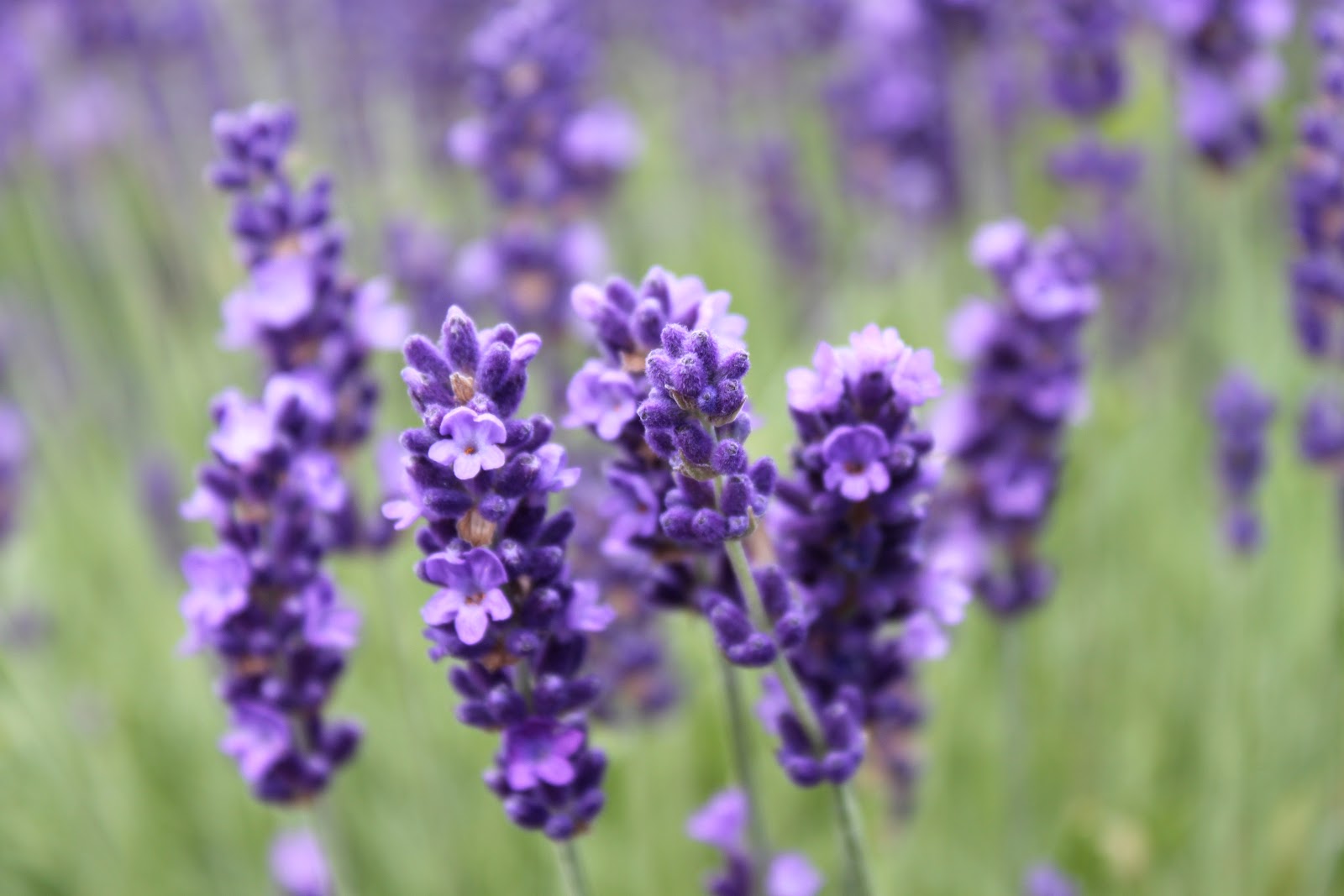
Lavender Honey


After Mama and Papa, my first word was probably miel, which is French for honey.  I have loved honey for as long as I can remember.  I still have a little comic book about bees and honey, published by a Canadian honey producer in the early '60s.

An early childhood memory is of the big jar of crystalized honey, which my Grandparents bought in British Columbia's Boundary-Similkameen region. The honey was placed high above the kitchen cupboards, beckoning to be used on morning toast. Like Winnie-the-Pooh, I could have stuck my whole head in a jar of the stuff! 


Bees will travel three kilometres (just under two miles) from the hive, sometimes further.  They pollinate many varieties of plants along the way.  It is impossible to control their flight path (I have an image of hundreds of little bee harnesses, getting tangled up as they buzz from field to field).  To produce single flower honeys, such as clover, strawberry or blueberry, farmers need to plant a single crop stretching about three kilometres in every direction, or, like the Beatles song says, Strawberry Fields forever!

Lavender Honey is one of the rarest of the world's varieties of honey.  If you are fortunate to live near a lavender farm with it's own bee hives, you may have tasted the lightly floral, lavender flavour of their honey.


An on-line American company sources its lavender honey from a "remote region" in Southern Spain. They describe it as being light in colour, with a "slightly purple hue".  Closer to home, the largest lavender farm in Ontario, Terre Bleu, in Milton, Ontario, produces lavender honey.  In addition to equestrian stables, the farm has its own apiary, or bee hives.  The Globe and Mail describes their lavender honey as, "gorgeous...the kind of honey that must be tasted straight up on a spoon first, then drizzled over top-notch ice cream".

You can make your own lavender flavoured honey.  While not true lavender honey, it will taste of lavender. You'll need a mild honey, such as clover (buckwheat is way too strong).  Use just under a cup of honey for a small bunch of fresh or dried lavender blossoms (about fifteen blossoms). Gently heat the honey in a saucepan, and add the lavender. Let it cool, and refrigerate it overnight. Then, reheat it over medium heat, and strain the blossoms through a sieve so that you are left with clear honey.  Et, voila!  


Photographs Copyright of:  Ruth Adams, Widow's Endorphins Photographic Images Incorporated.

Sunday, 9 July 2017

Delphiniums


Delphinium.  By the time you've said the name, Summer's over!  There are two different stories about the origin of the name. One version, is that the tall, spikey, multi-flowered plant is named for the ancient Greek city of Delphi, home to the Oracle of Delphi.


The plant was orignally named Delphinium Apollo, after the Greek god of the sun (you know, Zeus' son).  Apollo was not only the sun god, he presided over art, music, poetry, prophecy, truth, light, and healing.  He taught mortal men the art of medicine.  He could also bring on plagues.

That may be another link between Apollo and delphiniums.  As beautiful as they are, delphiniums are toxic to both humans and livestock.  They can kill cattle. Strangely, domestic sheep are immune to the plant's poison.


Delphiniums have five sepals, forming a small pocket with spurs at one end.  In days gone by, the spurs reminded English farmers of the sharp spurs on the claws of meadow larks, thus the other name for delphinium - Larkspur.


Depending on the variety, this perennial will grow anywhere from three to seven feet, making it a favourite choice for gardeners creating structure, and drama in a garden.  The plants need to be staked, otherwise they may topple over in a strong wind.


Blue is an unusual, and therefore sought-after colour in a garden.  Delphiniums come in all shades of blue - ethereal blue, powder blue, lavender, lapis, purple, and indigo.  There are also white delphiniums, pink delphiniums, rare red delphiniums (Cardinale Delphiniums), and even rarer bright yellow delphiniums, which grow in California.


But, I digress...I said there were two stories about the origins of the name.  The second story requires imagination.  A lot of imagination.  The flowers are said to resemble dolphins leaping out of the water.  The Greek word for dolphin?  Delphin.  

I poured through botanical images to find anything that looked like leaping dolphins, and found one image.  This 1820 illustration (below) does capture that frolicking dolphin look.  Apollo believed dolphins were sacred creatures. 


Were the flowers named for Apollo's city of Delphi, or for the dolphins he revered?  I do not have the answer.  Like the great Oracle of Delphi, I will make this prophecy:  if you plant delphiniums in your garden this year, you'll enjoy them for years to come!


Botanical illustration (1820), The Botanical Register, Wiki Images.
Photographs Copyright of:  Ruth Adams, Widow's Endorphins Photographic Images Incorporated.

Wednesday, 5 July 2017

Sweet Peas


In the language of flowers, Sweet Peas mean "blissful pleasure".  These early Summer blooms have an ethereal fragance, that is delicate and sweet, yet, powerful enough to evoke distant memories of warm Summer mornings.  


I bought this small bouquet last Saturday, at the local farmers' market, here in Toronto.  The transluscent blossoms were beautifully displayed in simple Mason jars.  The young farmer was especially proud of the variegated sweet peas he had imported as seeds, from a grower in the Pacific Northwest. I was sold, just inhaling the fragrance of the bouquet.  


Sweet peas are grown from seed each year.  In cold climates, the seeds are started indoors in late Winter, and transplanted in late Spring.  In the South, gardeners sow sweet peas after Labour Day, and they grow in the Spring. 


A climbing vine with delicate tendrils, sweet peas grow best if they have something to cling to.  They will grow taller than most basketball players, if they have string, netting or a fine trestle to climb. They love sunshine!  Plant them in a place that gets full sun to part shade, in rich, well drained soil, and they'll rise to the occasion.     


Sweet peas are an old fashioned flower, popular during Queen Victoria's reign.  The Queen of England loved them, and so did the "queen of the house", in every home, on every street and country lane in North America.


Although we think of sweet peas as British or American, they originated in Italy.  In 1695, Franciso Cupani, who may or may not have been a monk with the Order of St. Francis, was caring for their botanical garden in Misilmeri, not far from Palermo, Sicily, when he discovered a new plant.  He named it, Lathyrus distoplatyphylos, hirsutus, mollis, magno et peramoeno, flare ororo, or in simpler terms, fragrant (odoratus) pea (lathryrus).


While the fragrance is intoxicating, the flower is a neurotoxin.  Perhaps it was Dr. Casper Commelin, a botanist of the School of Medicine in Amsterdam, Netherlands who discovered that.  Who knows. Dr. Commelin was one of the international botanists who received the seeds of the newly discovered plant from Cupani.  In 1701, Commelin published his observations, along with the first illustrations of the flowering sweet pea.

It was a Scottish nurseryman, Henry Eckford who raised the sweet pea to new heights, crossbreeding the original plant to create larger blossoms, in beautiful colours.

Modern day breeders have tended to favour more colourful varieties of sweet peas.  If you want to grow more fragrant sweet peas, choose "old fashioned", or "heritage" varieties.


Photographs Copyright of:  Ruth Adams, Widow's Endorphins Photographic Images Incorporated.

Tuesday, 20 June 2017

Peonies for a Summer Evening


The Summer Solstice begins shortly after Midnight, ushering in the longest day of the year.  The official beginning of Summer is 12:24am Eastern Daylight Time, Wednesday, June 21st.  This year, I'm welcominig Summer with a celebration of peonies.  For those in the Southern Hemisphere, where Winter is just beginning, think of these as giant snowballs!


White peonies always remind me of a garden performance of the Swan Lake ballet, with ballerinas in feathery white tutus. Peonies are the Divas of the garden.  They love the spotlight (the sun), and need to stand out (don't plant them next to a big tree that will compete with them for nourishment).


Peonies are one of the most beautiful flowers in the garden.  The word, "breathtaking" is often used to describe them. These voluptuous, complex flowers are also fragrant.  Their rose-like scent will perfume a room.  In the garden, peonies are most fragrant in the early morning.  Their oils evaporate in the heat of the day.


Before clicking my camera, I gave each blossom a quick tap with my hand, to scatter any ants...and there are always ants sheltered in the petals.  Ants are a good thing.  They eat the bugs that chew on the young buds, and for that good deed, they dine on the flower's nectar.  When cutting blossoms to bring indoors, turn the blossoms upside down, and give them a light shake.


Welcome Summer!

Photographs Copyright of:  Ruth Adams, Widow's Endorphins Photographic Images Incorporated.

Monday, 12 June 2017

Rainbows and Irises


Iris was the Greek goddess of rainbows, connecting heaven and earth.  The tall, colourful flower which bears her name, seems to reach for the sky, its petals forming a rainbow like arch.  There are 325 species of Iris, and 50-thousand registered varieties, in almost every colour of the rainbow.  

Just steps from my home, there are irises in shades of blue, purple, yellow, brown, maroon, black and white.
  

Whether five feet tall, or an eight inch dwarf, all irises have six petals.  The three large outer petals are called falls, and the three inner, upright petals are called standards.  The Fleur-de-Lys, the symbol of France and of Quebec, is an iris.  The flower is depicted with two of the three falls on either side of a standard.

In the barbershop world of flowers, irises are bearded or unbearded.  The smaller Japanese and Siberian irises are unbearded.  To state the obvious, the beard is the soft hair at the centre of each of the three falls.  


Most irises have bright yellow or orange "Viking" beards.  Some though, have purple or black beards, like these...


Irises are gregarious plants.  Not only do they come back to visit year after year, they bring more Irises with them!  Irises will spread.  Every two to five years, gardeners divide the bulbs, and plant them in other parts of the garden.

Plant them in full sun, and they will thrive.  They need at least six to eight hours of full sun, or they won't bloom.  Like all rainbows, a little rain is the magic ingredient.  


The brightly coloured flower attracts brightly coloured hummingbirds.  The hummingbirds are attracted to the colour alone, since irises are not known for their nectar.  Ironically, the Greek goddess for whom the flower is named, is often depicted holding a pitcher of nectar.  


Irises may be named for a mythological figure, and emblazoned on flags and royal crests, they are also an old-fashioned, homespun flower.  Many people say the flower looks like the kind of frilly aprons our Great Grandmothers wore while preparing the Sunday dinner.


Iris, the Greek goddess, is not only associated with rainbows, she is always carrying a message from the Olympian gods. This week, with the flowers at their peak, send a rainbow bouquet of irises with a message of love!


Photographs Copyright of:  Ruth Adams, Widow's Endorphins Photographic Images Incorporated.